
THE GREAT SUMMER MELTDOWN: KEEPING PETS SAFE IN THE HEAT
When Alabama turns into one giant sunbaked dog park, it’s time to help your furry family members beat the heat!
Summer temperatures can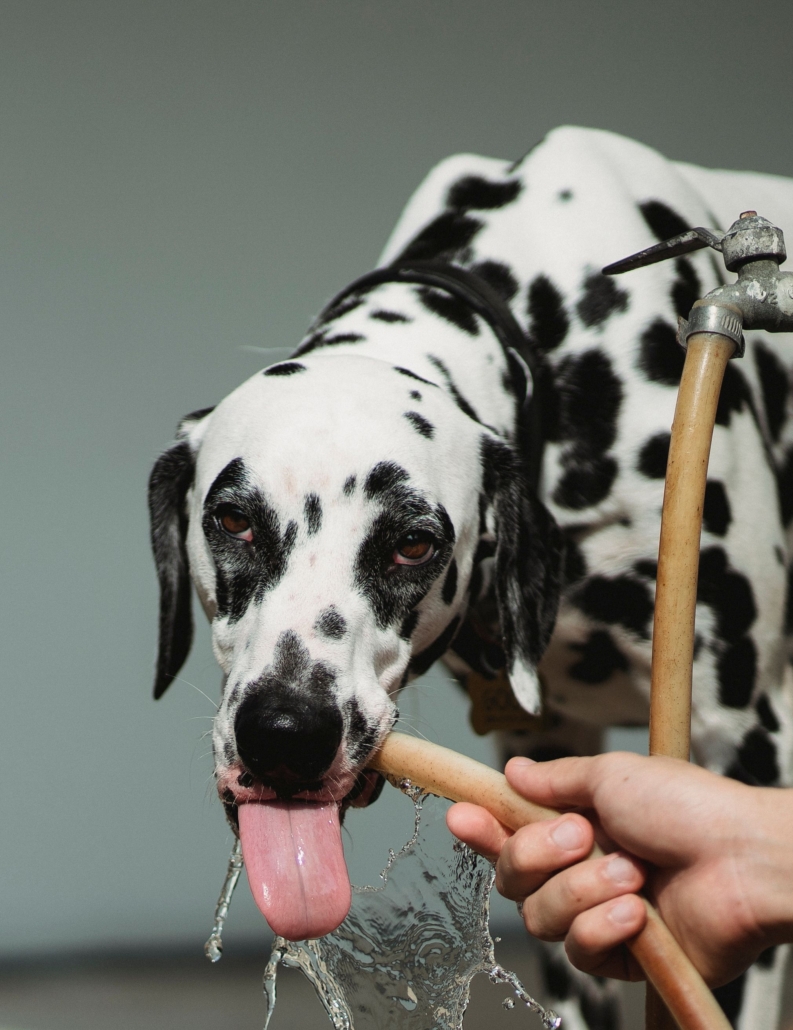 climb fast, and while we might cool off with a cold drink and some shade, our pets are counting on us to keep them safe. A pet’s body temperature can rise because of illness, but it can also soar simply from spending too much time in hot, humid weather. When that happens, it can lead to hyperthermia, also known as heatstroke or heat prostration. This is a serious and potentially life-threatening emergency that requires immediate attention.
TYPES OF PETS MOST AT RISK
- Puppies and kittens
- Senior pets
- Overweight or obese animals
- Brachycephalic breeds (Bulldogs, Pugs, Persian cats, etc.)
- Pets with heart or respiratory disease
- Thick-coated breeds
- Highly active or working dogs
- Pets left outdoors without shade or fresh water
- Pets left in motor vehicles. Temperatures in motor vehicles can be 20-40° F greater than the outdoor temperature.
Reasons Cats Experience Heat Stroke
Cats sweat very little. Like dogs, cats only sweat through their paw pads, so sweating is not an effective cooling method.
Cats pant less often. Healthy cats generally do not pant unless they are extremely stressed or overheated. By the time a cat is panting, it may already be in significant distress.
Cats hide illness. Cats are experts at masking discomfort, so signs of overheating may not be obvious until heat stroke is advanced.
Indoor cats aren’t immune. Poor ventilation, homes without air conditioning, enclosed sunrooms, attics, or garages can become dangerously hot, even if a cat never goes outdoors.
Reasons Dogs Experience Heat Stroke
Dogs don’t sweat like humans. Dogs have sweat glands only on their paw pads and around their noses, which contribute very little to cooling. Instead, they rely almost entirely on panting to release heat.
Panting has its limits. Panting works by evaporating moisture from the tongue, mouth, and respiratory tract. When the air is hot and humid, evaporation becomes much less effective, making it difficult for dogs to cool themselves.
Exercise creates internal heat. Running, playing fetch, hiking, or even an exciting game at the dog park generates muscle heat. If the body can’t release that heat quickly enough, the core temperature rises rapidly.
Signs of Heatstroke
- Excessive panting
- Restlessness
- Labored breathing
- Pacing
- Heavy drooling
- Pale, blue, or purple gums
- Weakness
- Lethargy
- Unsteadiness
- Vomiting
- Collapse
- Seizures
Do’s and Don’t’s of Heatstroke
- Do not delay cooling your pet because you are worried about making them too cold.
- Move your pet to a cool, shaded area away from the heat source.
- Use cool or cold water to help lower their body temperature and place a fan nearby to increase airflow.
- If your dog is awake, able to hold their head up, and can safely be placed in water, immersion can be effective. Do not submerge their head.
- Do not place your dog in water if they are unconscious, having seizures, struggling to breathe, vomiting, or unable to hold their head up. Instead, continue applying cool water and use a fan or air conditioning if available.
- For cats, avoid immersion in water since it can cause additional stress. Instead, wet their ears and paws with cool water and use a fan to help with evaporative cooling.
- Avoid covering your pet with wet towels, as this can trap heat instead of helping them cool down.
- Never force water into your pet’s mouth, and do not leave them unattended while attempting to cool them.
Heatstroke is a serious condition that can often prove fatal, but by taking smart steps to prevent your pet (and you!) from overheating, it is easily avoidable. Please reach out to us if you have any questions or concerns for your pet’s wellbeing and how to keep them cool in the hot Alabama weather.





