
WHEN THE HOUSE GETS QUIET: HELPING PETS BEAT THE BACK-TO-SCHOOL BLUES
As everyone heads back to school, our furry family members may suddenly find themselves spending more time alone. While dogs are particularly sensitive to this change because they thrive on companionship, cats can also experience stress when their routines change or they spend more time apart from their people.
The transition from summer break to a new school-year routine can trigger separation anxiety or other separation-related behaviors in pets. Separation anxiety is more than simply missing their owners, it is a true panic response that can affect your pet’s well-being and your family’s daily life.
If you think your pet may be struggling with separation anxiety, the first step is to schedule a visit with your veterinarian.
Common Signs of Separation Anxiety
- Increased verbalization, including barking, meowing, howling, and whining
- Attempts to escape the house, even when you are home
- Physical clinginess when you are home
- Refusal of food, treats, and water while alone
- Vomiting and diarrhea
- Overgrooming
- Destructive behaviors such as chewing, digging, clawing at doors and windows, and self mutilation
- Inappropriate incontinence
- Shaking, pacing, restlessness, drooling, or other signs of fear or panic
How to ease your pet’s separation anxiety
Schedule an appointment with your veterinarian. Some signs of separation anxiety can mimic other medical conditions and behavioral problems. If possible, a video of their abnormal behavior to show your vet can be very helpful. Occasionally a veterinarian may recommend medications, supplements, and routine modifications to help soothe your pet.
Avoid leaving your pet alone for long periods of time. Some pets do well being left for a full work day and some do not. If it is possible during your daily routine, visit home during lunch for a potty break, playtime, and some belly rubs.
Keep them mentally engaged. Before or after your daily schedule, engage your pet with puzzle feeders, playtime, or obedience training to tire out their brain. We do not recommend leaving puzzle feeders out unsupervised due to chewing behaviors, small parts, and potential for foreign body ingestion. Window bird boxes are great mental stimulation for cats. Remote treat dispensers that you can activate from work may also be beneficial.
Never punish your pet for anxiety related behaviors. While it is understandable for you to be frustrated, punishing a pet with anxiety induced behaviors can often worsen the behaviors at hand.
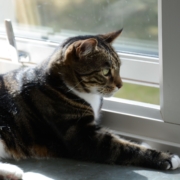
Create a calm, comfortable environment before you leave. Keep arrivals and departures calm by speaking in quiet voices and providing gentle reassurance to your pet. Playing music or leaving the TV on can help relax animals. Clothing and blankets that smell like you or your family members can create a sense of closeness for your pet while you are gone. Cats may enjoy a cozy hiding spot in the sun.
Practice short departures to gradually build independence. Before your new routine starts, you can leave for short periods of time and gradually increase the length of your absence to build confidence and resilience in your pet.
Consider a pet sitter or qualified daycare. Pet sitters can be hired for visits during the week to help provide potty breaks or emotional connection for your pet. Qualified dog daycares may be an additional option that you can discuss with your veterinarian.
What is the underlying cause?
It is also important to understand why your pet is acting out. Are they frustrated, fearful, or bored?
Frustration. Pets that direct their energy towards exits, clawing at windows, chewing on doors, or breaking through gates, immediately after being left alone are often driven by high levels of frustration. They act out because they are unable to follow you. Mental stimulation and gentle reassurance that you will return can help quell some of the frustration your pet is feeling.
Fear. Pets that shake, hide, pace, vocalize, drool, or have accidents in the house may suffer from fear or panic. They may also appear to shut down and seem vacant. Treatment for these pets includes rebuilding a sense of safety in the home, starting with creating a safe space, then gradually introducing departures paired with high positive objects, such as food puzzle toys.
Boredom. Chewing, digging, self mutilation, and vocalization can also happen simply because a pet is not getting enough physical exercise or mental stimulation. Walks, playtime, or mental stimulation before or after you leave may prove beneficial to beat the boredom.





